

Cervical cancer is probably one of the most unknown and unfamiliar types of cancer despite that it is the fifth most frequent cancer in women based on the number of deaths.
A large percentage of the women population has never heard nor has very little knowledge of what it is.
Early stages of cervical cancer show almost no symptoms and is very hard to detect once ignored.
Symptoms of Cervical Cancer
- Vaginal bleeding
- Contact bleeding
- Moderate pain during sexual intercourse
- and unusual vaginal discharge
are some of the symptoms but these occurrences are usually mistaken for or are disregarded.
Advance stages shows symptoms like:
- Loss of appetite
- Drastic weight loss
- Over fatigue
- Pelvic pain
- Back pain
- Leg pain
- Single swollen leg
- Heavy bleeding from the vagina
- Leaking of urine or feces from the vagina
You must not wait for these advance symptoms to happen before you go to your doctor.
The earliest sign that something is wrong with your system must immediately tell you to have a check up with your gynecologist.
But as they always say, prevention is better than cure.
There are a lot of ways on how to prevent yourself from getting cervical cancer.
It was found out that HPV (human papillomavirus) infection is the primary risk factor for almost all cases of cervical cancer.
How do you get this HPV infection?
HPV infection is sexually transmitted and therefore can be prevented.
Avoiding exposure to HPV by delaying sexual intercourse at a very young age, limiting your number of sexual partners and avoiding having sex with men who had a lot of partners can help.
Condoms also give you some protection since it prevents skin-to-skin contact of the genitals, but the protection it provides is not 100%.
If you are a smoker, then the risk of having to develop cervical cancer will be twice higher since the chemicals present in the cigarettes smoke increase the risk by damaging cervical cells.
So not smoking is another effective way to reduce the risk.
Important of Having a Pap Test
But one of the best ways is to get a regular Pap smear or Pap test.
All women should start getting their Pap test 3 years after they begin having vaginal intercourse, but not later than 21 years old.
Test should be done regularly every year and should not be stopped even after having children.
Though Pap test is proven very effective, it is still not accurate.
To increase the accuracy of your Pap test, do not schedule your test during your menstrual cycle.
48 hours before the test, do not douche, do not have sexual intercourse, and do not use tampons, birth control foams, or any other vaginal creams.
Follow these easy ways to protect yourself, choose a gynecologist that you feel comfortable with and make sure to visit your doctor regularly and you’re sure to have a healthier life cervical cancer free!
Protect Yourself From Cervical Cancer
Cervical cancer is a type of cancer that can be easily find at the early stage by just a pap test.
Women must be acutely aware of any changes in their bodies, which may be signs and symptoms of any gynecological disease. Cervical cancer is one such.
The Cervical cancer does not grow suddenly but slowly over time. This is why it is necessary for women to get a regular Pap smear test every year.
There are no obvious symptoms of cancer of the cervix.
So the Pap smear identifies changes to the cervix that may be indications of cervical cancer, which can start the treatment soon and successfully.
Getting to the Root of Cervical Cancers
Cervical cancers begin in the lining of the cervix, which connects the body of the uterus to the vagina.
Cervical cells that are normal slowly develop precancerous changes, which then turn into cancer.
Very few women with these precancerous changes of the cervix will go on to get cervical cancer. So cervical cancers do not form overnight.
The process of developing cervical cancer generally takes a few years, but it can sometimes happen in less than a year or six months.
For the majority of women, precancerous cells will remain changeless, and disappear without any treatment. However, if these precancerous cells are treated, some real cancers can be stopped.
There are two ways to stop this disease from taking root. One way is to absolutely prevent the formation of the precancers and the second is to diagnose, find, and treat the precancerous changes before they turn into the actual cancer.
Cervical precancers are formed due to exposure to the human papilloma virus or HPV.
Vaccinations against HPV and using condoms help to limit such exposure.
Another way to prevent cervical cancer is to have tests done, and this includes a Pap smear test, which will help to detect HPV and precancerous lesions.
The American Cancer Society lays down guidelines for the early detection of cervical cancers and lays stress on the need to have a Pap smear test every year.
Early Detection of the Cervical Cancer Helps with Faster Recovery and Treatment
Once cervical cancer is diagnosed it should be treated immediately.
Traditional treatments are radical surgery to remove the cancer, chemotherapy, or radiation therapy.
Surgery may include the removal of the cancer or a hysterectomy.
The latter may mean the removal of the uterus or of the cervix, uterus, Fallopian tubes, and ovaries.
Laser surgery is also an option.
In radiation therapy, x-rays or other kinds of radiation are use to shrivel tumors and kill cancer cells.
Radiation therapy includes external or internal radiation. In chemotherapy, drugs are used to kill cancer cells.
Chemotherapy drugs are orally, or they may be via injection into the body through a vein or muscle.
Alternative Treatments for Cervical Cancer
There are several alternative treatments that may also use as a supplement to the traditional courses.
These would involve a healthy diet and exercise such as yoga.
Keeping the body fit and eating well will increase the chances of combating the cancer while considerably improving the quality of life.
The patient should also maintain a healthy and positive attitude, as mental health will also affect the course of the disease.
Further, a good support system in place, such as relatives and friends, will help to improve the chances of survival.
A proactive attitude to the treatment of cervical cancer will help a patient overcome this silent disease.
Aftermath of Diagnosis of Cervical Cancer
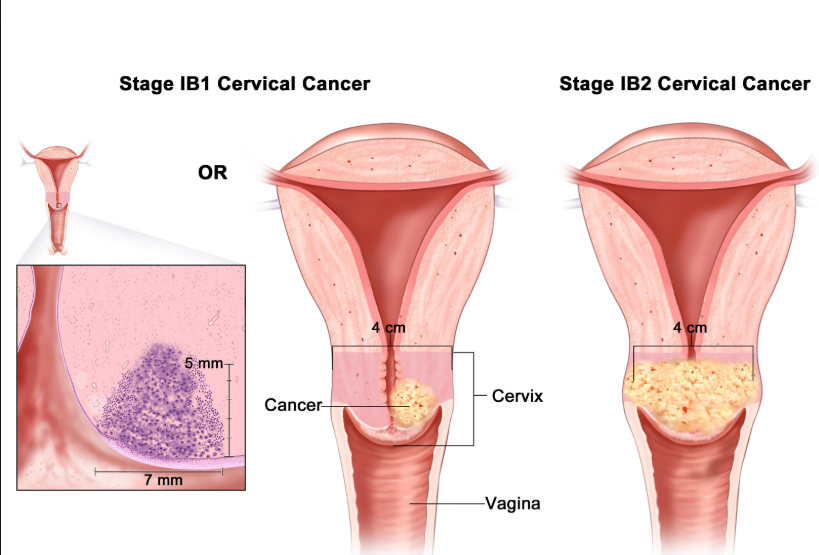
Once a patient is diagnosed with cervical cancer, the chances of recovery depend on a number of factors.
These include the stage of the cancer and whether it has affect only the cervix or has attack other parts of the body such as the lymph nodes.
The physician will need to determine the type of cervical cancer whether squamous cell or adenocarcinoma.
Size of the tumor is also important, as the more enlarges it is the worse the prognosis is likely to be.
Patient’s age, overall health, and desire to have (more) children need to be consider as well.
X-rays of the chest and lymphatic system may be taken to determine how far the cancer has spread.
Magnetic resonance imaging and CT scans can also be carries out to determine the stage of the cancer.
All the above factors influence the treatment that the patient is likely to opt for.
Treatments of Cervical Cancer
With the physician’s help she can decide on surgery (radical or total hysterectomy), chemotherapy, or radiation treatments.
These are the standard treatments but she can also decide to volunteer for a clinical trial that is testing out a new treatment.
Other Alternative Treatments For Cervical Cancer
Patients can compliment the standard treatment by opting for alternative treatment under homeopathy, ayurveda, acupuncture, yoga, meditation, or herbal medicine but this will depend on their own beliefs in such holistic systems.
With all this there should also be an emphasis on general health, diet, and exercise.
It is very necessary that the patient keep a positive frame of mind.
Importantly it is vital to keep active and happy, and not brood about the disease or its treatment.
There are many support groups for cancer victims as well as help and advice from cancer survivors.
Preventing or Reducing Cervical Cancer Risk
Can you believe that among cancer Cervical Cancer is the most preventable type?
Some specific types if cervical cancers cannot be prevented but some can certainly be.
Cervical cancer can affect women’s reproductive health. Some ways for reducing cervical cancer risk are as follows:
1- Getting a Pap smear:
Pap smear can drastically reduce the risk of cervical cancer at a very early stage.
Before the cancer develops at all Pap smear can diagnose it and treatment can take care of it.
How often or at what interval should one have Pap smear depends up on doctor’s advice.
2- Limiting sexual partners:
Pap smear can also be prevented by not having too many sexual partners.
Women who have had multiple sexual partners are more at a risk of developing cervical cancer than those who don’t.
Sexual contact is responsible for transferring HPV, a virus or infection that is the cause of cervical cancer.
The infection gets transferred because of unprotected sex. Use of condom reduces the risk of HPV to a great extent.
You can also get HPV vaccine at the right age.
Actually i’s for the parents to get the teenage children to get the vaccine but parents are debating over the issue of vaccination.
Age at which the vaccine can be offer is 9.
And this is the point of debate.
But it’s a certain way out to reduce cervical cancer risk.
3- Stop smoking to reduce the risk of developing cervical cancer:
Women who smoke and are also infected with HPV virus are likely to have cervical dysplasia.
Prevention is better than cure and hence not to start smoking or quit smoking as early as possible the way to go to cut down the risk of getting cervical cancer.
Even secondhand smoking or passive smoking causes damage to health.
If a patient has been detected with abnormal Pap smear it is advisable that she gets regular check ups and medical advice from time to time.
Moreover, if you have a history of being treated for cervical dysplasia in the past, you are still advise to follow up with Pap smears or colonoscopies.
Cervical Dysplasia can return or re attack and if not diagnosed on time can develop into cervical cancer.


